
Written by Alessandro Hurtado.
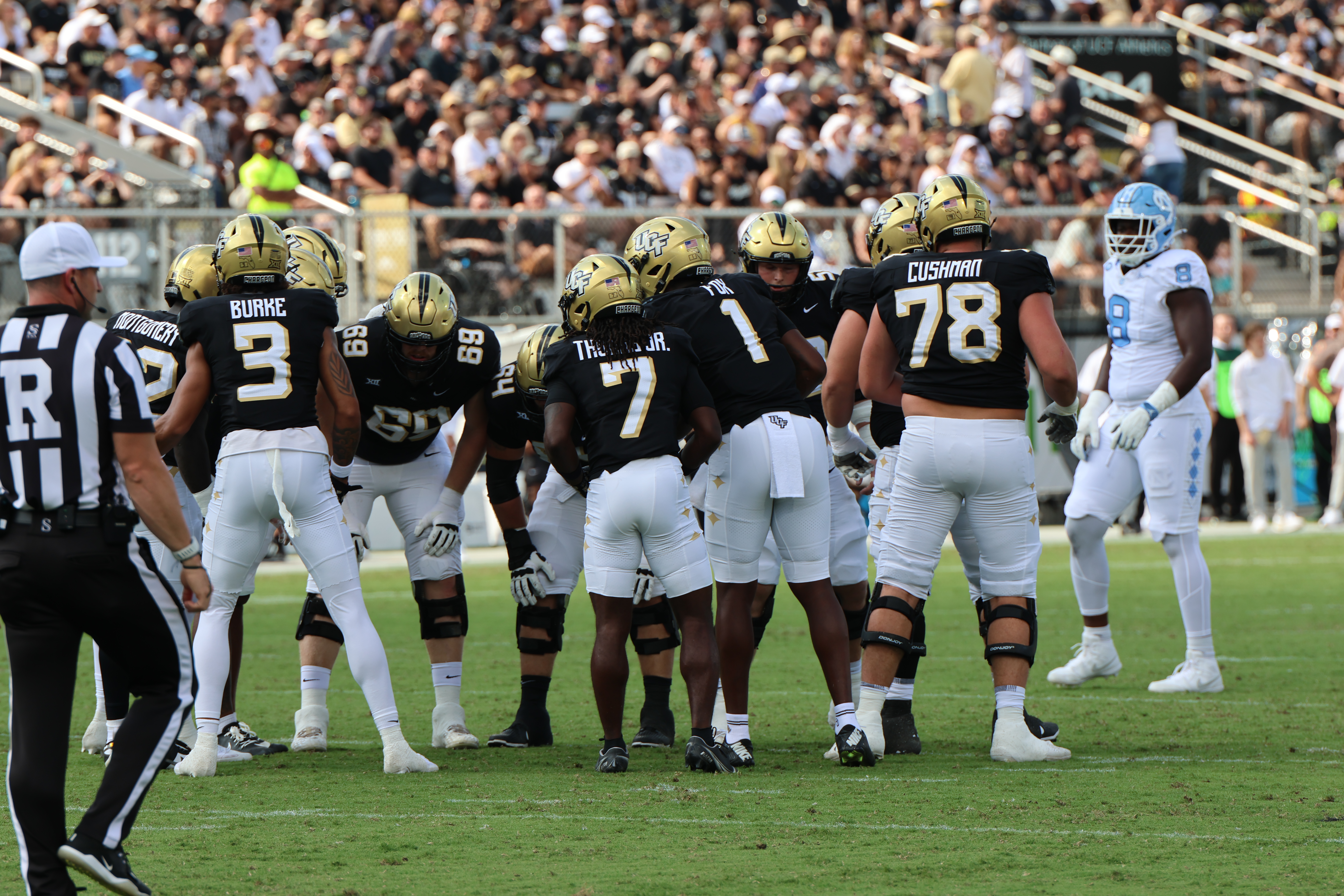
A 5-7 record and another bowl-less December left many UCF fans frustrated during Scott Frost’s first season back in Orlando. The Knights showed flashes of explosive offense and moments of competitiveness against Big 12 opponents, but inconsistency at quarterback, defensive, breakdowns, and a roster still transitioning from multiple coaching regimes ultimately proved too much to overcome.
Now, entering 2026, the expectations have changed.
For the first time since returning to UCF, Frost enters a season with a roster largely built in his own image. The transfer portal has reshaped key position groups, the quarterback room has been upgraded, and maybe most importantly, there is continuity throughout the program.
The result? UCF may be one of the most difficult teams to predict in the Big 12, and of the most dangerous.
A program at Crossroads
The Knights’ transition into the Big 12 has been anything but smooth.
After years of dominating the AAC and earning national attention through undefeated seasons and New Year’s Six appearances, UCF has discovered that competing weekly in a power conference presents a different challenge.
The talent gap isn’t enormous. The margin for error is.
Last season’s 5-7 finish once again demonstrated that reality.
The knights were rarely outmatched physically. More often, they were undone by turnovers, defensive lapses, and an inability to consistently finish games against conference opponents.
But unlike previous seasons, there is reason to believe the lessons learned in 2025 could translate into something bigger.
The QB Who Could Change Everything
No addition will be more important than transfer quarterback Alonza Barnett III.
If UCF’s ceiling rises this season, Barnett will likely be the reason.
Frost’s best teams have always featured quarterbacks capable of stressing defenses with both their arm and legs. From his days at Oregon to his undefeated run at UCF in 2017, the formula has remained consistent: tempo, mobility, and explosive plays.
Barnett appears to fit that mold.
His dual-threat ability gives Frost greater flexibility in the run game while creating more opportunities for vertical shots downfield. Defenses can no longer focus exclusively on containing UCF’s running backs. Every snap becomes a potential quarterback keeper, read-option, or deep play-action opportunity.
If Barnett quickly adapts to Big 12 competition, the Knights could possess one of the conference’s most dangerous offenses.
Year Two Matters
Historically, Year Two is often where programs make their biggest leap.
Players understand the terminology. Coaches understand personnel strengths and weaknesses. Recruiting classes begin fitting specific schemes rather than simply filling roster spots.
UCF enters 2026 benefiting from all three.
The offense should operate faster and more efficiently. Decision making should improve. Communication errors should decrease.
For a team that lost multiple close games last season, even marginal improvements could translate into several additional victories.
The Defense Holds the Key
This isn’t just a cliché. For UCF specifically, defense is the difference between 6 wins and 9 wins.
In 2025, UCF’s offense wasn’t the biggest problem.
Even when the offense struggled, the larger issue was that the defense couldn’t consistently get stops against quality Big 12 opponents. They especially struggled with:
- Giving up explosive runs
- Allowing QB’s too much time
- Missing tackles in space
- Failing to get off the field on 3rd down
Some work in these areas could swing 2-3 games towards the Knights’ favor.
Where Things Could Go Wrong
Fans often focus on ceiling.
The floor matters too.
Scenario 1: Barnett fails to adjust
This is the biggest risk offensively.
Everyone assumes he will be an immediate upgrade.
Maybe he is.
Maybe he isn’t.
Jumping from the SBC to the Big 12 isn’t automatic.
Struggles on his end could lead to:
- More turnovers
- Less explosive offense
- More pressure on defense
Suddenly, a mere 6-6 becomes realistic.
Scenario 2: Defensive portal additions don’t translate
It is often easy to overestimate portal additions as a fan.
Just because someone played at:
- Florida State
- Arkansas
- Tennessee
doesn’t mean they’ll dominate.
The question is:
Can those pieces fit together?
Sometimes, portal classes look amazing on paper and then struggle with communication and chemistry.
Scenario 3: Offensive Line Issues
This is the most overlooked.
Everything Frost wants to do relies on:
- Running the football
- QB run game
- Play-action passing
If the offensive line is mediocre, the entire offense becomes less explosive.
Final Predictions
The difference between a six-win season and a nine-win season may come down to only a handful of plays. That’s the reality for a UCF team that appears to improve across the board but still has critical questions to answer across the board.
The most likely result is a return to a bowl eligibility and a finish in the middle of the conference standings. A 7-5 record, including a 5-win campaign in Big 12 play, would represent clear progress while establishing UCF as a competitive program capable of challenging the conference’s upper tier. While a championship run may still be a long shot, the Knights appear positioned to move in the right direction and enter November with meaningful games still ahead.